AI Work
What I’ve shipped with AI.
Some of it is work my teams did at Exclusive Resorts; the rest I designed, built and deployed myself.
Exclusive Resorts
AI inside a luxury travel club.
AI product work at Exclusive Resorts: trip recommendations and itinerary building for Members, and assistive tools for the Ambassador team. The hard part was never what a model could do; it was deciding which calls we’d let it make for a Member, and what happens when it gets one wrong.
Personal Project · Built end to end
Tappet
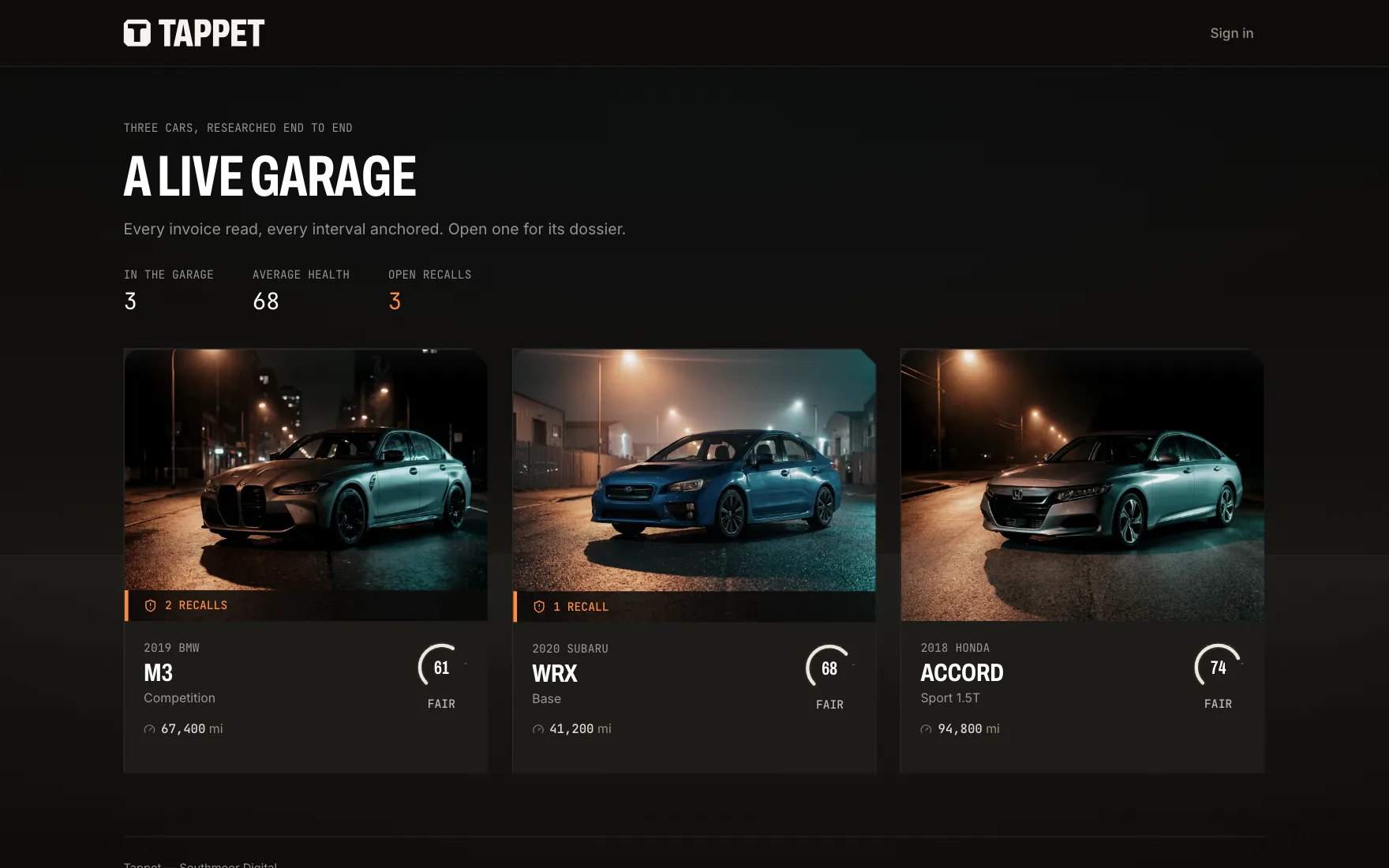
An auto-ownership consultant, built for a problem I have myself: nothing keeps a car’s record in one place. What it’s had done, what fails on that model and when, what it needs next. Tappet reads the invoices, anchors the maintenance intervals, watches the recalls, and answers questions with all of it already in hand.
Add a car by year, make and trim and Tappet researches the model: what fails and when, the factory schedule, fluid specs, open recalls. Every screen reads from that record, and the record grows with each invoice it’s shown. The standing rule is ranges over verdicts and “unknown” over a guessed default. Recalls are matched by model, not by VIN, and the screen says so rather than telling an owner their car is clear.
What it does
Proof of concept · Personal
Lumière
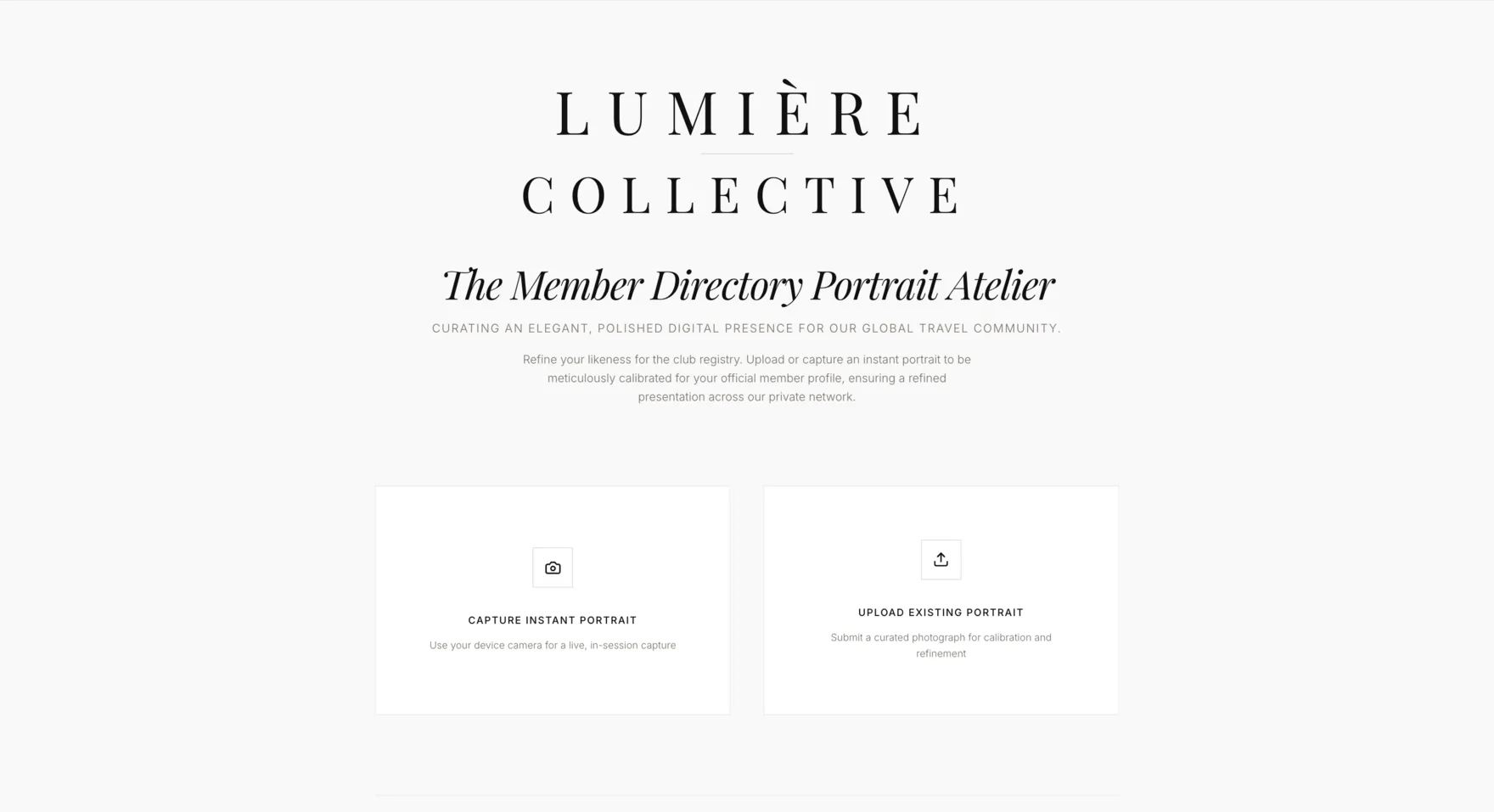
A personal proof of concept in image pipelines. The bet: someone without a profile photo they like just leaves, and doesn’t come back. Upload or capture a portrait, get four professionally styled variations in under sixty seconds: four parallel Gemini 2.5 Flash calls behind a Deno edge proxy that holds the key and runs safety validation server-side. A working build.
AI Practice
AI as a working environment.
This is harder to show than a shipped product, but it’s closer to how I actually work.
I use Claude across most of my working week, and what I’ve built around it is closer to a working environment than a prompt library. Each product I directly PM gets its own project, carrying system instructions, role context and shared skills, so a teammate picking it up gets the context without a handoff meeting.
The skills are where the leverage is: ticket writing, release notes, standup prep and interview synthesis, shared across the team so everyone drafts from the same structure and tone rather than from scratch. It’s the only reason a four-person panel produces notes that can actually be compared. Scheduled jobs handle the recurring work, and connections into Jira, Confluence and Figma mean a ticket gets written or a design note captured straight out of the conversation.
The practical effect is that the first draft of almost anything takes minutes instead of starting from a blank page. None of it is exotic. The work is in checking what comes back before it goes anywhere.